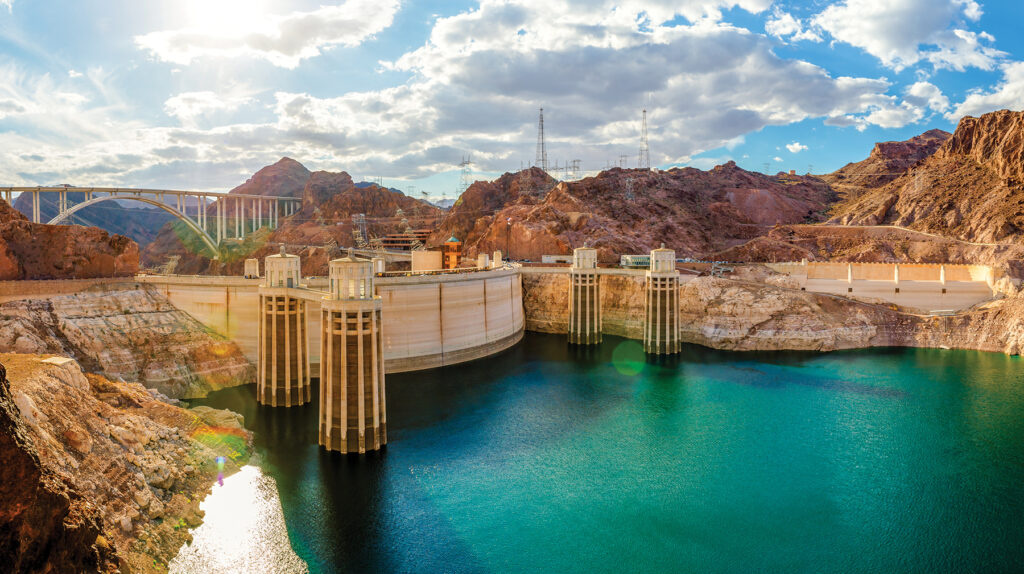
The Hoover Dam, a colossal concrete arch-gravity dam straddling the Colorado River on the border between Nevada and Arizona, stands as a potent symbol of American ingenuity, ambition, and ultimately, perseverance in the face of adversity. Its construction during the height of the Great Depression not only provided much-needed jobs but also tamed a wild river, delivering vital water and power to the arid landscapes of the Southwest.
The story of the Hoover Dam begins long before its physical construction. For decades, the untamed Colorado River was known for its unpredictable floods and droughts, posing constant threats to agricultural communities downstream. The idea of harnessing its power and controlling its flow gained traction in the early 20th century, culminating in the Boulder Canyon Project Act of 1928, authorizing the construction of the dam.
Selecting the site was a challenge. After careful consideration, Black Canyon, a deep gorge carved by the Colorado River, was chosen for its narrow width and solid rock foundation, ideal for supporting the immense weight of the structure. The project was awarded to a consortium known as Six Companies, Inc., a coalition of experienced construction firms led by Frank Crowe, a pioneer in concrete dam building.
Construction began in 1931 and was a feat of engineering unlike anything seen before. The first task was to divert the mighty Colorado River. This was achieved by drilling four 50-foot diameter tunnels through the canyon walls, diverting the river around the construction site. These tunnels, now tourist attractions themselves, provide a glimpse into the scale of the project and the challenges faced by the workers.
The dam itself was built using a revolutionary method. Rather than pouring the concrete in one massive block, it was poured in interlocking columns, allowing the concrete to cool and shrink evenly, preventing cracking and ensuring its structural integrity. Millions of cubic yards of concrete were used, enough to pave a two-lane highway from Seattle to New York City.
Life for the thousands of workers involved in the project was arduous and dangerous. The extreme heat of the Nevadan desert, coupled with the precarious working conditions, took a heavy toll. Despite the official death toll of 96 (a figure disputed by some who believe it was significantly higher), the dedication and resilience of these men and women are undeniable. They built homes, schools, and a sense of community in the harsh desert landscape, transforming the barren area into a bustling hub of activity.
Completed in 1936, two years ahead of schedule, the Hoover Dam was an immediate success. It tamed the Colorado River, creating Lake Mead, the largest reservoir in the United States at the time. The dam provided flood control, irrigation water for agriculture, and generated hydroelectric power for homes and industries across the Southwest.
The Hoover Dam continues to serve its vital purpose today, providing essential resources to millions. More than just a source of water and power, it stands as a testament to the power of human ingenuity and collaborative effort. A marvel of engineering, a symbol of overcoming adversity, and a window into a pivotal moment in American history, the Hoover Dam remains a must-see destination and a powerful reminder of what we can achieve when we dare to dream big.
For information about visiting Hoover Dam, please visit: https://www.USBR.gov/lc/hooverdam/service/directions.html.