
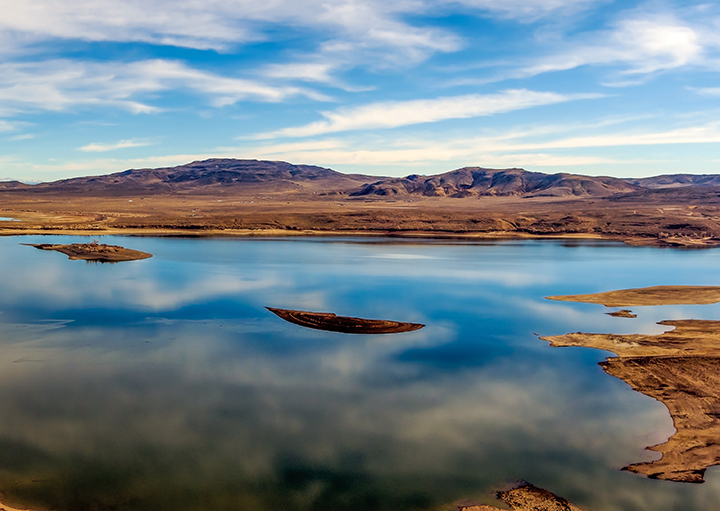
Lyon County, Nevada, steeped in the rugged beauty of the Great Basin, holds a secret whispered by the wind and etched into its very landscape: the story of Lake Lahontan, a colossal prehistoric lake that once dominated the region. Understanding this history is key to appreciating the county’s current environment and the unique features that define it.
Imagine a vast body of water, larger than all the Great Lakes combined, stretching across much of Nevada and into parts of California and Oregon. This was Lake Lahontan, born of the last Ice Age, a consequence of cooler temperatures and increased precipitation that filled the closed basins of western Nevada with meltwater. Lyon County, in its entirety, sat within this immense lake, completely submerged and forever influenced by its presence.
A Rise and Fall: The Life and Death of Lake Lahontan
Lake Lahontan began its existence around 50,000 years ago, fluctuating in size depending on climatic shifts. Its highest levels were reached around 13,000 years ago, reaching a staggering depth of over 900 feet in some areas. The landscape of Lyon County during this period was unrecognizable. Today’s dry valleys were submerged, and mountain ranges stood as islands in a shimmering expanse of water.
The evidence of this ancient lake is everywhere. Look closely, and you’ll see:
- Shorelines: Terraces carved into the hillsides mark the various high-water levels of the lake. These ancient shorelines are visible as distinct lines etched into the landscape, providing a visual testament to Lahontan’s fluctuating size.
- Tufa Towers: These bizarre and beautiful rock formations, such as those found at Pyramid Lake (a remnant of Lake Lahontan), are formed by the interaction of calcium-rich spring water with the lake’s alkaline water. While perhaps not as prominent in Lyon County as in other areas, similar formations can be found, hinting at similar underwater processes.
- Lake Sediments: The valley floors are covered with fine-grained sediments deposited by the lake, creating fertile soils that support agriculture even today. These sediments also contain fossilized remains of aquatic life, further proof of the lake’s existence.
As the Ice Age drew to a close, the climate warmed, and Lake Lahontan began its slow decline. Evaporation outpaced inflow, and the lake gradually shrank, leaving behind a series of smaller lakes and playas (dry lake beds). Pyramid Lake, Walker Lake, and the Carson Sink are all remnants of this once-mighty body of water.
Lyon County: Shaped by the Lake
The legacy of Lake Lahontan continues to shape Lyon County in profound ways:
- Water Resources: Even though Lahontan is gone, its influence on the region’s water resources remains. The Carson River, fed by snowmelt from the Sierra Nevada, flows through Lyon County, providing vital irrigation for agriculture. This river system, once a major tributary to Lake Lahontan, is still a lifeline in the arid landscape.
- Agriculture: The fertile soils deposited by the lake make Lyon County a significant agricultural area. Farmers cultivate crops such as alfalfa, hay, and garlic, relying on the legacy of Lahontan to sustain their livelihoods.
- Ecology: The unique ecosystem of Lyon County, adapted to the arid environment and alkaline soils, is a direct result of the region’s history as a lakebed. The plants and animals that thrive here have evolved to survive in the challenging conditions left behind by Lake Lahontan.
- Recreation: While not directly on a major remnant lake, Lyon County’s proximity to Pyramid Lake and Walker Lake provides recreational opportunities for fishing, boating, and wildlife viewing. These lakes, in turn, draw attention to the history of the larger Lahontan system.
Preserving the Memory
Understanding the history of Lake Lahontan is crucial for managing the region’s resources sustainably. It reminds us of the dynamic nature of the environment and the importance of preserving the delicate balance of the ecosystem. By studying the lake’s history, we can learn valuable lessons about climate change, water management, and the interconnectedness of the natural world.
As you travel through Lyon County, take a moment to imagine the vast expanse of water that once covered the landscape. Remember Lake Lahontan, the ancient giant that shaped the land, and appreciate the lasting legacy it has left behind. It’s a reminder that beneath the surface of our modern world lies a rich and fascinating history, waiting to be discovered. The echoes of Lake Lahontan still resonate, whispering tales of a time when Lyon County existed as a vibrant underwater world.
For more information, call (775) 577-2226 or visit https://Parks.nv.gov/parks/lahontan.